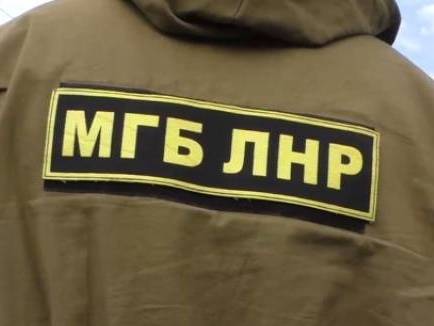
On February 20, the Luhansk Regional Prosecutor’s Office served notices of suspicion on two officers of the so-called “LPR Ministry of State Security” (MGB), who had detained and systematically tortured a civilian resident of Starobilsk for more than three months over his pro-Ukrainian views.
What is known about the suspects
Valerii Valeriiovych Kravchenko (born August 10, 1981) is a Ukrainian citizen, a native of Sukhodilsk in Luhansk region, registered in Luhansk. After the occupation, he voluntarily joined the so-called “Ministry of State Security of the LPR,” where he served as a senior operative in the counterintelligence department.
Dmytro Viktorovych Kirdeyev (born December 26, 1995) is also a Ukrainian citizen, a native of Stakhanov, Luhansk region. For ideological reasons, he joined the same agency as an operative.
Circumstances of the crime
After Russian troops occupied the Starobilsk district of Luhansk region on February 28, 2022, Kravchenko and Kirdeyev began targeting and persecuting local residents for their pro-Ukrainian stance. The premises of the former Starobilsk inter-district department of the Security Service of Ukraine (SBU) were turned into a torture chamber.
The victim was a civilian resident of Luhansk region with no affiliation to the Armed Forces of Ukraine (AFU).
On March 10, 2022, at about 7 a.m., a group of around 20 individuals, including Kirdeyev, Kravchenko and other unidentified persons, broke into the private home where the victim lived. In the yard, they knocked him to the ground by striking his legs, causing him to fall face down on the pavement. One of the attackers stepped on his face with his boot. His hands were cuffed with metal handcuffs. He was then taken inside the house, punched in the stomach, had a bag placed over his head, and was forced into the back seat of a car.
At the seized SBU building, Kirdeyev personally punched the victim in the chin, showed his ID, and identified himself as an “MGB officer.” During the first interrogation, on Kravchenko’s orders, two armed guards beat the man with a rifle butt in the chest and with a shovel handle on his legs. After he fell, they continued kicking him in the stomach and back. Following the interrogation, he was placed in a detention facility (SIZO).
On March 12, the victim was again brought in for questioning. Kravchenko personally kicked him in the chest, causing him to fall backward with the chair. He then placed his foot on the victim’s throat and threatened to kill him for providing “false testimony.”
On March 17, the victim was transferred to Luhansk, to the building housing the LPR MGB. During the transfer, he was punched twice, thrown onto the floor of the vehicle, and the bag over his head was secured with tape.
On March 20, during another interrogation, Kravchenko struck him four times on the thighs with a rubber baton. Kirdeyev threatened to kill him if a polygraph test indicated “false” answers regarding contacts with the AFU.
In early April, a polygraph test was conducted. After it concluded, Kravchenko took the victim out of the office and punched him five times in the stomach, resulting in his hospitalization.
A few days later, two unidentified men described as being of “Caucasian appearance” were involved. With the knowledge and tacit consent of Kirdeyev and Kravchenko, they attached clothespins to the victim’s ears and applied electric current, gradually increasing the voltage. The victim lost consciousness. After regaining consciousness, he was kicked in the head and chest.
On June 10, Kravchenko again personally tortured the victim, striking him in the groin with his knee and delivering more than ten punches to his head and chest.
Only on June 24, 2022 — after an interrogation that was video recorded — was the man finally released. By that time, he had spent more than three and a half months in unlawful detention.
Suspicion
The Luhansk Regional Prosecutor’s Office notified Kravchenko and Kirdeyev of suspicion of cruel treatment of civilians committed by a group of persons acting in prior conspiracy, under Part 2 of Article 28 and Part 1 of Article 438 of the Criminal Code of Ukraine.
Their actions are classified as violations of the Geneva Convention relative to the Protection of Civilian Persons in Time of War and Additional Protocol I, and constitute war crimes under international humanitarian law.