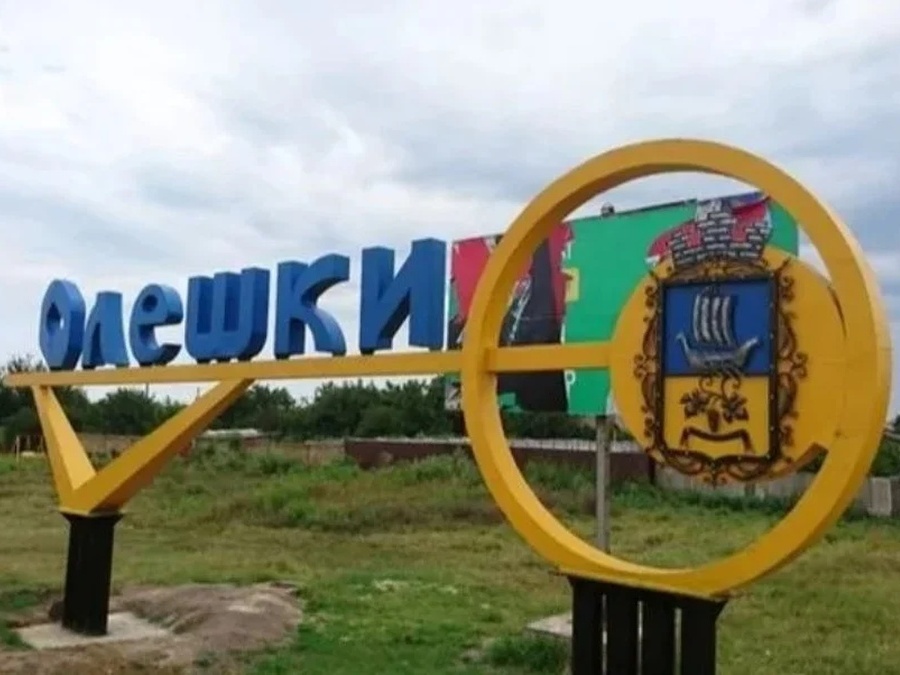
Occupied Oleshky has found itself in a deep humanitarian crisis. А 73-year-old woman, Nina, and her husband managed to escape after years of occupation and a complete blockade that has lasted for several months. When the full-scale invasion began, she chose not to leave, hoping for a quick liberation. But four years later, she was forced to change that decision. What follows is a firsthand account of life in the occupied city, without embellishment or cuts.
Published first at MOST website.
The occupiers kicked us out of the apartment
We are entrepreneurs. We traded in clothes and shoes. We traveled to villages. On February 24, we were just going to the market early in the morning. We planned to work in Mali Kopani. And our daughter called us that the war had started. We stayed home. And it’s a good thing we didn’t go…
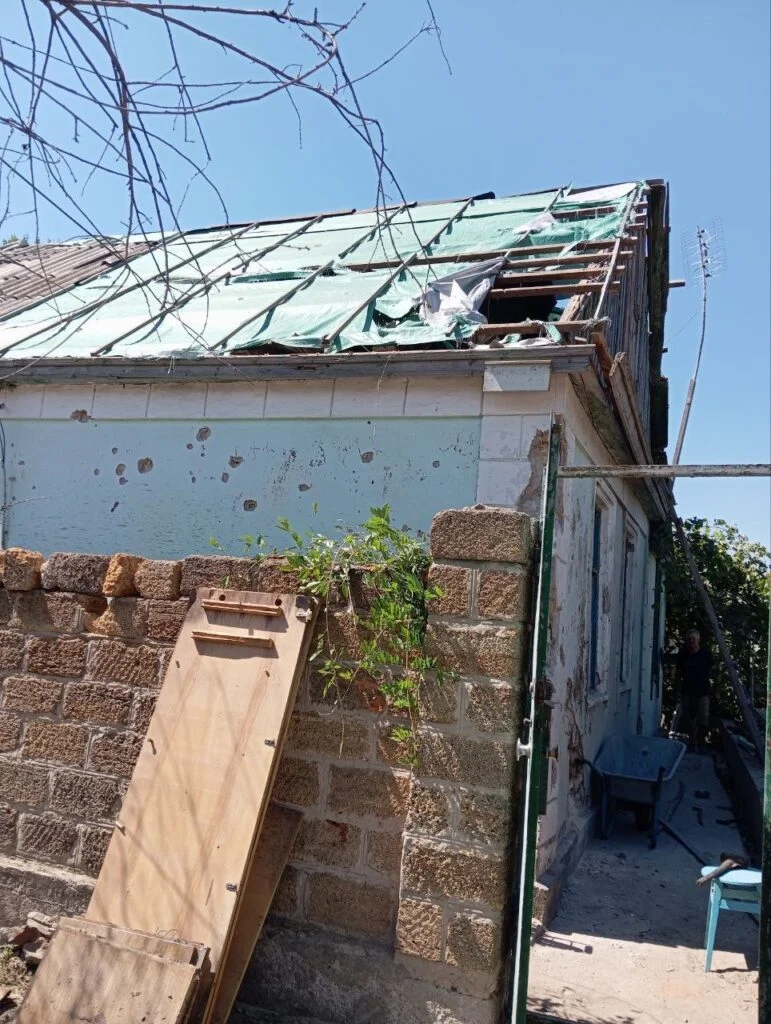
They (the russians) came with machine guns and said: “Get out, free up our apartment.” At that time, my husband’s old mother, who lived with us, was still alive. We said: where are we going to go? “We don’t care, to the basement,” was the answer. My husband begged to be allowed to spend the night. He packed some things and we moved to the house that we had for a summer residence. It had already been hit five times. I don’t know by what miracle we survived. Our yard dog was torn in half… We lived next to the hospital and the school. They often come there. As for the hospital, there are not many people working there anymore. They said that at first the salary was high, 80 thousand [roubles]. And then everything was reduced to 20-25 thousand [roubles], so there were few people willing to work. There is a pharmacy in the hospital, but there are almost no medicines there.
Dead on the streets
After the liberation of Kherson, a stench like burnt bodies periodically began to appear in Oleshky. It was a pungent, sweetish smell that was impossible to breathe. We think that the occupiers are burning their dead. There are also dead russians lying on the streets, dogs are stretching them and eating them. In general, there are a lot of homeless dogs in Oleshky, but no cats, apparently the dogs ate them. The bodies of soldiers have not been taken out since autumn, so in the Zhytloselyshche (a residential district) there are already skulls and bones in the middle of the road. The corpse of an occupier has been lying near the winery for a long time, with his arms and legs gnawed off, his dogs were bringing him to people's yards... And when asked "Why don't you take yours?" Orcs answer: “This is not ours!”…
Occupants are afraid of the drones of the Ukrainian Armed Forces
At first, the occupiers walked around the city openly, buying up at the market. They were with machine guns and in uniform, only now in masks. At one time, women who came from russia came with them. They said: “We like your place, everything is very tasty. We are here forever!”. Then the occupiers entered the market not in crowds, but one by one, by two. And then they began to disguise themselves as locals so that they would not be noticed. We see them walking, in civilian clothes, with some kind of rail in their hands, as if a resident is going to repair something. Now, after lunch, the occupiers do not go out at all. They also often change into women's clothes to mislead the operators of Ukrainian drones.
Blockade city
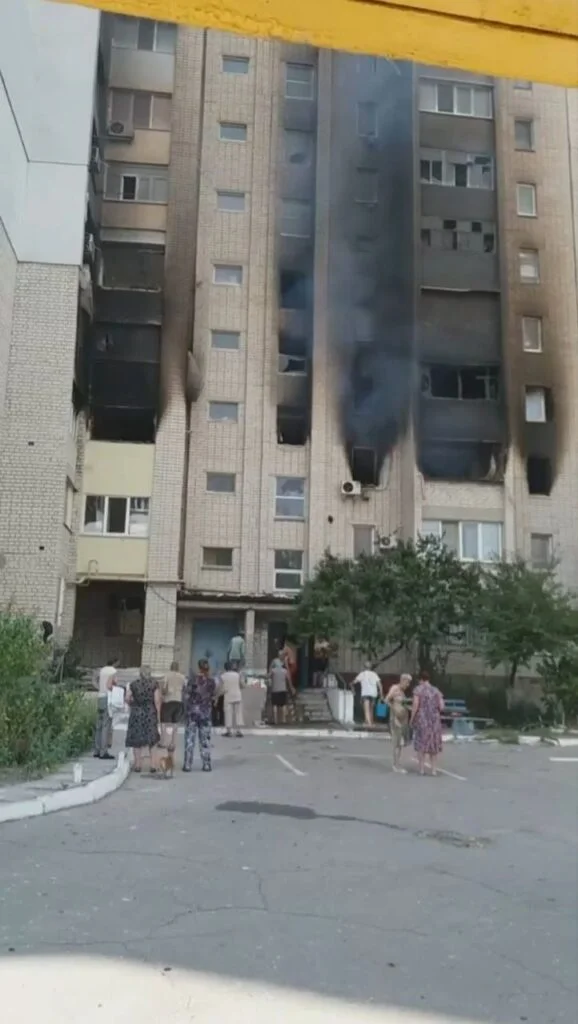
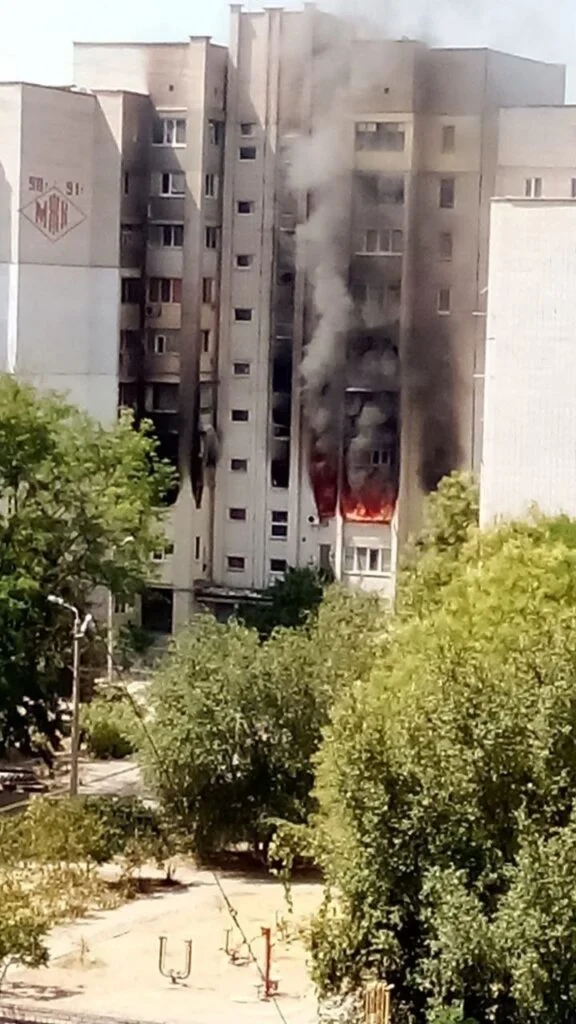
The authorities, that is, the occupation authorities, have not been visible in Oleshky for several years. The collaborators fled somewhere deep into the left bank. There has been no electricity in the city for three years: broken wires, fallen poles. The gas was turned off on July 8, 2025, and there is no heat either. Yes, this extremely cold winter, two sisters in the “Olympic houses” (the high-rise buildings in this area of Oleshky began to be built in the year of the 1980 Olympics) got frostbite, because there was no way to warm themselves. We had a stove in our house and we heated it, while many do not have such an opportunity. The water in the settlement disappeared immediately after the Kakhovka hydroelectric power station dam was blown up. Our city finally turned into a blockade after this new year. The occupiers mined the road. Food has not been delivered since February, except for two times. And people almost fought for them. Not a single store in the city is open. Previously, food was delivered from the Skadovsk region to a small market that opened near the hospital. You could buy milk products, sausages, etc. It was like this until the end of January. And then the husband would leave, and there was no more supply. The locals started bringing their own stuff, some sugar, if they had any supplies, that’s all. However, this year, when it got warmer, the chickens started laying. So people took their eggs to the so-called market, selling them for 800-1000 rubles per dozen (400-500 hryvnias).
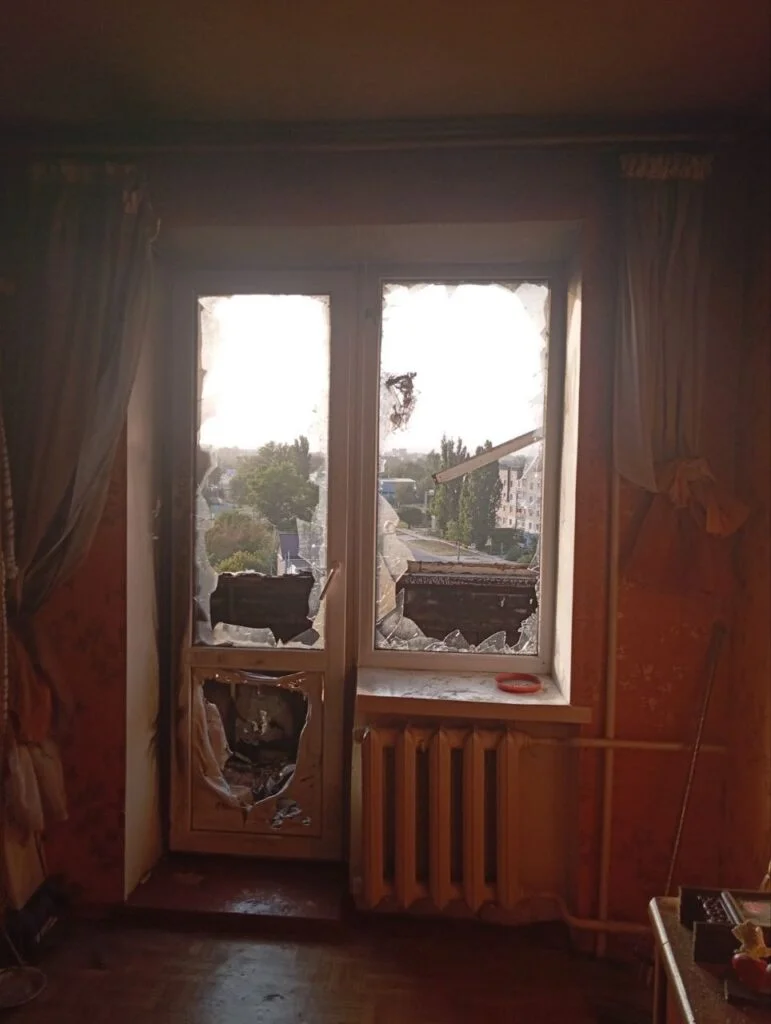
So how did we survive the winter? Last year we managed to grow vegetables. We had our own potatoes and onions. And we also added some other stuff. And this year it was scary not only to go out to the garden, but even to the yard. For example, I couldn’t even get to the gate. There were a lot of burned-down houses nearby. Humanitarian aid was brought to Oleshky until November last year. Every time it was the same: four cans of stew, four cans of canned food, cereals, sugar, buckwheat, oil. Then they said that the “humanitarian” would only be given to those who had a russian pension certificate. We didn’t do it, so we didn’t get any more food. We ate what we had accumulated: soup, borscht, and so on from the stew. We cooked with a gas cylinder. We had light from a generator, and we had stocked up on gasoline a while ago. Fuel hasn’t been brought into the city for a long time.
Blockade bread looks different
I have been baking bread in a frying pan for half a year. I will tell you the recipe. Take a cup of warm water, about 200 grams, pour it into a bowl. I put one and a half teaspoons of dry yeast and a teaspoon of sugar in it. I mixed it all until the yeast melted. I added a teaspoon of salt, then - flour by eye and at the end - oil. I kneaded it all, covered it and put it in a warm place. The dough rose for about two hours. And then you need to transfer it to a regular frying pan that you use. I pressed the dough with my finger and covered it with a towel on top so that it would rise a little more. Then - on a low heat and also covered - with a bowl. Another important thing - this bread needs to be turned over, because the bottom gets browned and the top is raw. It turns out like a flatbread, only quite high, sometimes up to 5 centimeters. And all the people in Oleshky bake such bread now.
Men disappear in Oleshky
A teacher who has long been retired spoke Ukrainian on principle. Although it is extremely dangerous to show principles there now. He looked after his elderly mother. Once he went to her, and after that no one saw him again. People think that the occupiers took him away - because of the Ukrainian language. Another man went to the apartment of his friends who had left to feed the dog. And once he found the occupiers there. And he asks: “What are you doing in someone else's house?” So they kind of showed him what they were doing there… They beat him half to death, it's a miracle that they didn't kill him. The man left for three months after this “meeting”. And about a month ago the family left for Odessa.
How people are buried in Oleshky
There have been no coffins in the city for a long time. My friend, she was 73 years old, got sick and died. We looked for a coffin, but couldn’t find it anywhere, there was no talk of wreaths and all that funeral stuff. So we buried her, wrapped in a carpet. They took her to the cemetery in a wheelbarrow, because there are no cars in the city at all. If anyone had any cars, the occupiers took them away. In general, people die often in Oleshky. Our neighbor froze in the apartment he rented, it was at the end of January. He was buried in a plastic bag, under the number on the grave. That’s how they bury everyone. No one gives anyone a funeral. There are no priests in Oleshky and the nearest villages, most of the churches have been burned down. The cemetery has been destroyed by shelling since 2023. So there is no peace for either the living or the dead.
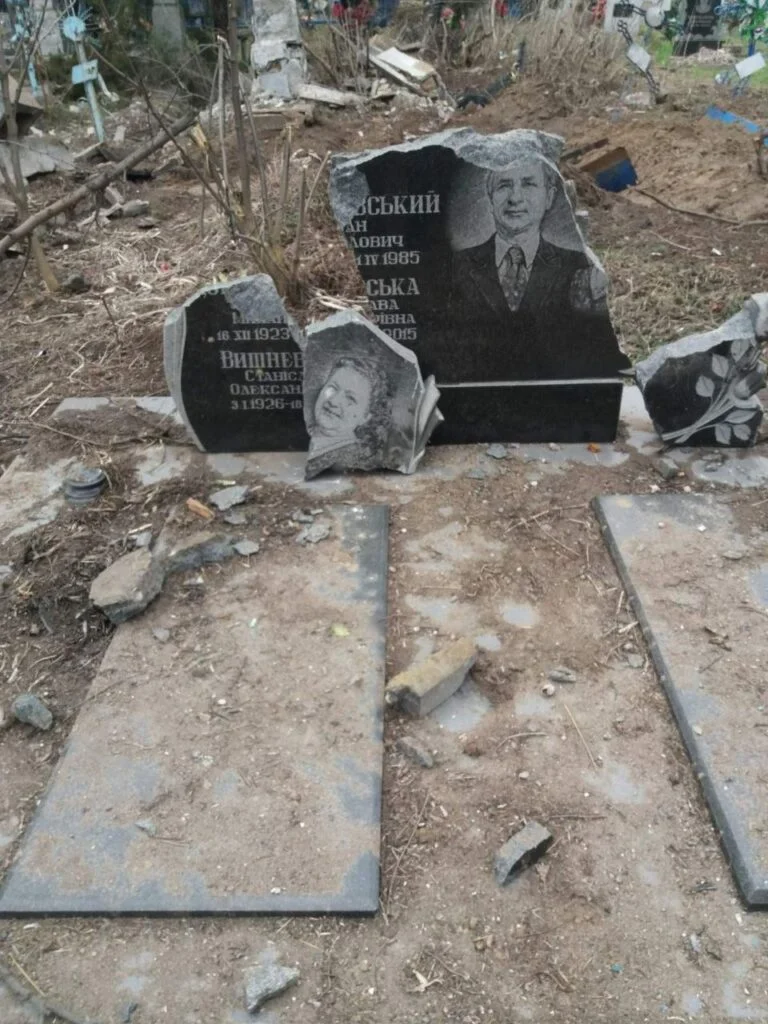
In general, no one can say for sure how many people died in Oleshky, especially because of the explosion of the Kakhovka hydroelectric power station. I know that when people with boats rushed to rescue the population in the flood zone, the occupiers simply turned them away at the checkpoint and were not going to evacuate anyone themselves. There was a case when, at the beginning of the flooding, soldiers closed the gate in one house to people, with the words “You’re going to drown!”. There were cases when the roof collapsed and people could not get out of the house, the bodies just floated, face down.
The decision to leave
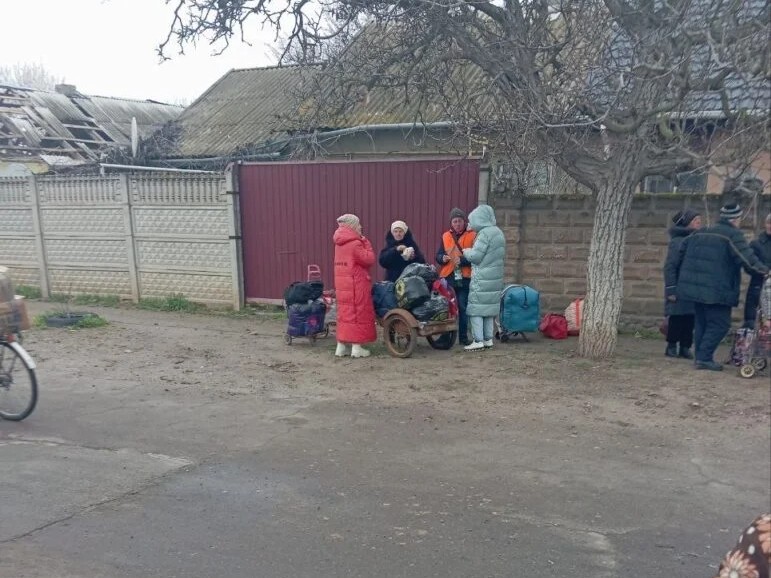
Not a moment of peace. The roar of shelling both day and night. The occupiers from Oleshky bomb Kherson, and then a response from ours arrives. So the front line is in the middle of our city. Our firewood supplies are practically exhausted, there is nowhere to get new ones. People cut down their fruit trees to keep warm. So it was clear – if we stayed, there was nothing to drown. My husband has diabetes, there was nowhere to get his medicine. We decided to leave from the new year. We had been waiting for four months, thinking that the highway would be demined. And then there were frosts, and the evacuation buses were blowing up. You should see how many burned-out cars were on the highway behind Oleshky towards Hopry [Hola Prystan]! Both on the side of the road and in the middle of the road – the buses had difficulty getting around them. There were a little fewer burned-out cars as far as Hladkivka, but still a lot. Oleshki and I left in three buses, where there were no seats. Some were placed on stools, some on bags. In Skadovsk we changed to a transport company. Then there was the road through Melitopol, five regions of russia and Belarus. In Kovel, volunteers picked us up, brought us to the church, fed us lunch and dinner for free. Then they gave us tickets to Kyiv, and there the children met us.
A man went to a fair in the capital. God, his eyes widened – how many products and how diverse they were! And the children also set such a table. Even ordinary lard — we hadn’t seen it for at least six months. The same with store-bought bread.
In Oleshky now there are many abandoned houses, broken – of course. They say that about 2 thousand residents still live in the city, but I think that it is unlikely that that many will gather, it doesn’t seem like it. But there are definitely children, we saw them. One family with school-age children left with us. Most people would like to get out of hell, but there is no way. At first they left for Skadovsk by ambulance, from the hospital, but then it became impossible. Carriers are also afraid to take risks, because cars are blown up, the roads are mined.
We don’t even think about returning. We would like to, but we will see there. The main thing is that they saved their lives. And we express our deepest gratitude to the volunteers, to all the good people who took us out. They are trying their best, they are asking for help from many organizations, but the occupied territory: who needs whom? But Saldo, the occupation governor, reports that the roads are being made, playgrounds are being built and that everything is fine in Oleshky... And there it is hell, hell on earth.