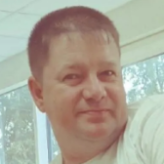
On December 24, the Main Investigation Department of the National Police of Ukraine announced a notice of suspicion against Vyacheslav Perevozkin, the head of Detention Center No. 3 in russia’s Perm Krai. According to investigators, Perevozkin organized and oversaw a system of brutal treatment of Ukrainian prisoners of war and civilians who were unlawfully held on russian territory. The crimes include torture, degrading treatment, and the deliberate creation of inhuman detention conditions that ultimately led to deaths.
Who the Suspect Is
Vyacheslav Viktorovich Perevozkin is a citizen of the russian federation, born on February 1, 1985, in the city of Gubakha, Perm Krai, where he currently resides.
From August 22 to November 6, 2024, Perevozkin served as acting head of Detention Center No. 3 of the Main Directorate of the Federal Penitentiary Service in Perm Krai. He was subsequently officially appointed head of the facility and continues to hold this position.
During his tenure, investigators say, Detention Center No. 3 in the city of Kizel became a site where Ukrainian military personnel and civilians abducted from occupied Ukrainian territories—particularly from Zaporizhzhia Oblast—were unlawfully detained.
Criminal Conduct
The investigation established that the aggressor state systematically deprived civilians of liberty in occupied Ukrainian territories and created a network of detention facilities for this purpose. Some captives were illegally transported outside Ukraine and transferred to Detention Center No. 3 in russia’s Perm Krai.
Under Perevozkin’s leadership, a system of physical and psychological abuse was established at the facility. Ill-treatment began upon prisoners’ arrival during the so-called “intake.” Detainees were removed from buses one by one, forced to squat, had bags placed over their heads, and were taken to separate rooms where they were beaten for hours with hands, feet, and rubber batons.
Afterward, prisoners of war and civilians were placed in cells with inhuman conditions: cold, unsanitary surroundings, no warm clothing or hot water, minimal food and drinking water, and restricted access to medical care. Meals and dishwashing were limited to three minutes; access to toilets was permitted only by command and for no more than one minute. From 6 a.m. to 10 p.m., detainees were forbidden to sit or lie down, forcing them to stand for up to sixteen hours a day.
Prisoners were under constant surveillance. Communication was prohibited, and all actions required explicit orders. Any perceived violation resulted in beatings or forced, exhausting physical exercises.
Investigators believe these practices were aimed at breaking detainees’ will, intimidating them, humiliating them on national grounds, and forcing complete submission.
Death of the Mayor of Dniprorudne
One documented episode concerns the death of Yevhen Matvieiev, the mayor of Dniprorudne. Russian occupying forces detained him on March 13, 2022, at a road junction near the villages of Orlianske, Mala Bilozerka, Balky, and Dniprorudne.
After his detention, Matvieiev was repeatedly transferred between various detention sites in occupied Zaporizhzhia Oblast, including temporary holding facilities in Melitopol and Dniprorudne, as well as an unidentified location in the village of Balky, where he remained at least until February 2023. In 2024, he was transferred to russia, first to Detention Center No. 2 in Taganrog.
In early September 2024, Matvieiev was transferred to Detention Center No. 3 in Kizel, which at that time was headed by Perevozkin.
On September 5, 2024, Matvieiev was subjected to the so-called “intake,” which effectively amounted to hours-long torture. That same evening, according to investigators, a group of at least eight detention officers again took detainees into the corridor and beat them repeatedly. Matvieiev was struck all over his body; after he collapsed while being returned to his cell, he was taken out again and beaten once more.
Following the torture, his condition rapidly deteriorated. He could no longer stand or move independently and repeatedly lost consciousness. Despite the obvious need for urgent medical assistance, none was provided.
On September 7, 2024, Yevhen Matvieiev died. The cause of death was a closed blunt trauma to the torso with multiple rib fractures and lung damage. To conceal the crime, detention center management forced other detainees, under pressure, to sign false statements claiming that the administration was not responsible for Matvieiev’s death.
Death of Journalist Viktoriia Roshchyna
Another documented case is the death of Ukrainian journalist Viktoriia Roshchyna. In July 2023, she traveled to the temporarily occupied territories of Zaporizhzhia and Kherson regions to prepare an investigative report on the real living conditions of civilians and the operation of torture facilities established by occupation authorities.
On August 4, 2023, she was captured in Melitopol by armed formations of the aggressor state. She was then held for nearly five months in undisclosed detention sites.
In late December 2023, she was transferred to Detention Center No. 2 in Taganrog, where she remained until September 2024, when she was transferred to Kizel.
By the time she arrived at Detention Center No. 3 on September 8, 2024, the journalist was in extremely poor condition: severely exhausted, effectively starving, and in constant need of medical care and medication.
The facility’s leadership was aware of her condition but deliberately created circumstances that further worsened it. When she demanded explanations for her unlawful detention and asked for basic necessities—hot tea, warm clothing, medical assistance—the response was punitive.
On the head of the detention center’s orders, psychological and physical pressure was applied. On September 11, 2024, Roshchyna was placed in cell No. 85, where she endured cold, unsanitary conditions, no hot water, minimal food, restricted toilet access, and a ban on sitting or lying down during the day. All her movements were strictly controlled, and communication with other detainees was prohibited.
On September 12, during a morning inspection, detention officers beat the journalist and two other civilian women held in the same cell, accompanied by humiliation and threats.
Afterward, her condition became critical: she could not move independently and frequently lost consciousness. Despite clear signs of a life-threatening state, she received no emergency medical care.
On September 19, 2024, Viktoriia Roshchyna died in detention.
Following the second death at the facility, inspections were conducted from late September through November 2024, during which numerous bodily injuries were documented among other detainees.
Investigators believe that, aware of the scale of violations, the facility’s leadership attempted to conceal the crimes. According to law enforcement, Perevozkin organized the collection of written statements from detainees under coercion, in which they falsely claimed that their injuries had occurred during transfers or due to accidental falls.
Ukrainian investigators view this episode as further evidence that torture and disregard for human life at Detention Center No. 3 were not isolated incidents but part of a systematic practice.
Other Victims
At least three additional episodes of ill-treatment involve civilians detained in different years at checkpoints of the so-called “DPR” and later transferred to Detention Center No. 3. In all cases, individuals were detained under the pretext of “verification,” held unlawfully for extended periods in occupied territories, and later transferred to the Russian Federation.
Upon arrival at Detention Center No. 3, all three victims underwent the so-called “intake,” involving hours-long beatings. Detainees were beaten with rubber batons, hands, and feet; electric shock devices were used; and service dogs were set on them. Violence occurred both during initial interrogations and systematically during daily inspections, collective punishments, and escorting.
Punishments were imposed for any—real or imagined—“violation of regime”: unauthorized movement, speaking, incorrect posture, washing one’s head without permission, or even a Ukrainian accent. As a result, victims were forced into exhausting physical exercises, beaten through cell doors, struck on the torso, ribs, and joints, leading to prolonged pain, loss of consciousness, and serious deterioration of health.
Charges
Perevozkin has been notified in absentia of suspicion under the following articles of the Criminal Code of Ukraine:
- Part 1, Article 438: cruel treatment of civilians committed by a group of persons acting in prior conspiracy;
- Part 2, Article 438: cruel treatment of civilians combined with intentional murder, committed by a group of persons acting in prior conspiracy.
If convicted, he faces life imprisonment.