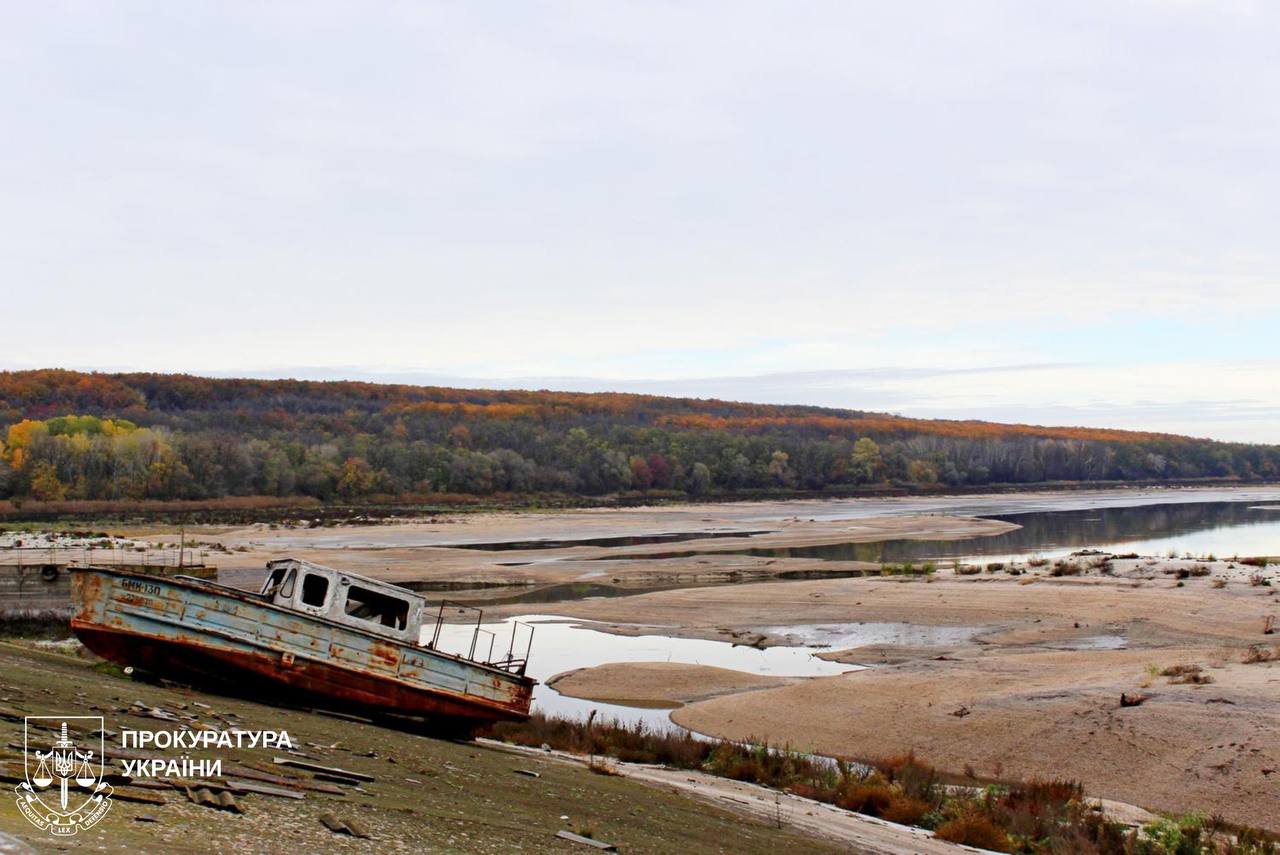
The Prosecutor General’s Office of Ukraine has filed an indictment with the court against two russian generals accused of ordering and carrying out the destruction of the Oskil dam in the Kharkiv region. Prosecutor General Ruslan Kravchenko announced the decision.
Background on the accused
Oleg Makovetsky, a Lieutenant General and commander of the 6th Air and Air Defense Army of russia’s Western Military District, was born on October 6, 1966, in Chuhuiv, Kharkiv region, and resides in St. Petersburg. According to the prosecution, he ordered air strikes on the dam and provided air cover during the withdrawal of russian forces.
Oleg Tsokov, also a Lieutenant General, commanded the 20th Combined Arms Army of the same district. Investigators allege that troops under his command planted explosives in the dam structure and detonated them during the retreat in September 2022. Tsokov was killed in July 2023.
Circumstances of the crime
The Oskil dam was built in 1958. The reservoir it formed extended 84.6 kilometers, covered more than 122 square kilometers, and held over 435 million cubic meters of water. It regulated the flow of the Oskil River, supplied the Siverskyi Donets–Donbas Canal, and provided water to millions of residents in eastern Ukraine, helping maintain water levels in the Siverskyi Donets in Donetsk and Luhansk regions.
At the outset of the full-scale invasion, between March 10 and 13, 2022, aircraft of the 6th Army carried out at least four strikes using Kh-59 missiles against the dam’s powerhouse and spillway gates. The strikes were launched from fighter jets; one aircraft was shot down and later became part of the evidentiary record.
Following a successful Ukrainian counteroffensive in the Kharkiv region, russian forces began withdrawing from the Izyum district. On September 12, 2022, soldiers of the 20th Army allegedly detonated explosives at the first sluice gate and on the roadway between the hydroelectric plant building and the machinery gallery, causing an uncontrolled discharge of water.
Between September 13 and 30, russian aviation reportedly continued striking the damaged structure with FAB-250, FAB-500, and KAB-1500 high-explosive bombs in order to accelerate the release of water and further destroy the dam.
As a result, the reservoir lost up to 70 percent of its water. Coastal soils were eroded, and significant damage was caused to the ecosystem of the Siverskyi Donets River.
The dam was not being used for military purposes. It did not supply electricity for military operations and did not qualify as a dual-use facility. Even if the roadway across the dam could theoretically have been used for troop movements, international humanitarian law accepts targeted destruction of military objectives rather than attacks on installations containing dangerous forces.
Article 56 of Additional Protocol I to the Geneva Conventions specifically protects dams and dykes from attack due to the risk of releasing dangerous forces and causing severe civilian harm.